
What needs to be done after a lift pit becomes flooded?
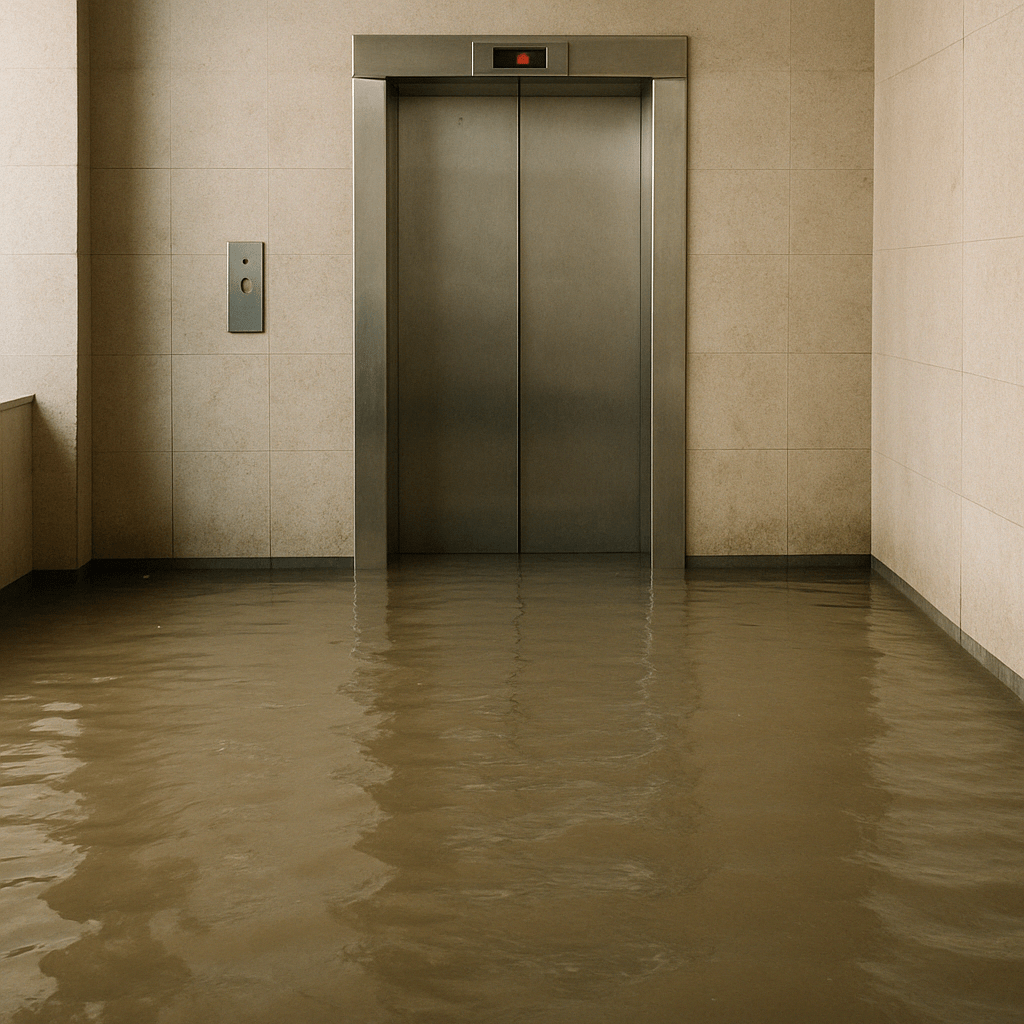
No matter what kind of lift you have, if the pit has filled up with water some important checks have to be made.
Ideally the lift car and counterweight were parked safely above the flood level and the damage was limited to the pit area. If the lift was running, water could have been carried through moving parts like ropes throughout the shaft.
Unfortunately, some costly repairs are likely, and left unchecked the damage may cause issues in the future.
Some equipment may appear ok from the outside, but water can wear away lubricants on bearings and cause trouble with electrical components due to corrosion leading to troublesome breakdowns or safety issues.
Check, replace, or overhaul:
➡ Safety circuit contacts such as buffer switches, governor slack rope switches, stop buttons, and overtravel limits.
➡ Electrical equipment like lighting and power outlets
➡ Special electronic equipment such as seismic sensors, inspection control stations, and pit emergency intercoms
➡ Governor ropes and compensation ropes – these steel wire ropes can often have a fibre core which can retain moisture and lead to later corrosion.
➡ Buffers – Polyurethane buffers should be checked for deformation as they can absorb moisture. Replace if damaged. Hydraulic buffers may have water that entered through breather holes and need to be thoroughly overhauled or replaced.
➡ Guide rails – clean, dry and then re lubricate
➡ Governor and compensator pulleys or sheaves – bearings to be overhauled or replaced
➡ For hydraulic lifts – ensure no water entered the tank or pump
Take care of the environment. Excess lubricants are present from guide rails, and especially in hydraulic lifts. Give consideration to where dirty water is pumped to.
If your lifts had a flooded pit and did not automatically shut down it’s a good idea to have a water level sensor installed.

You must be logged in to post a comment.