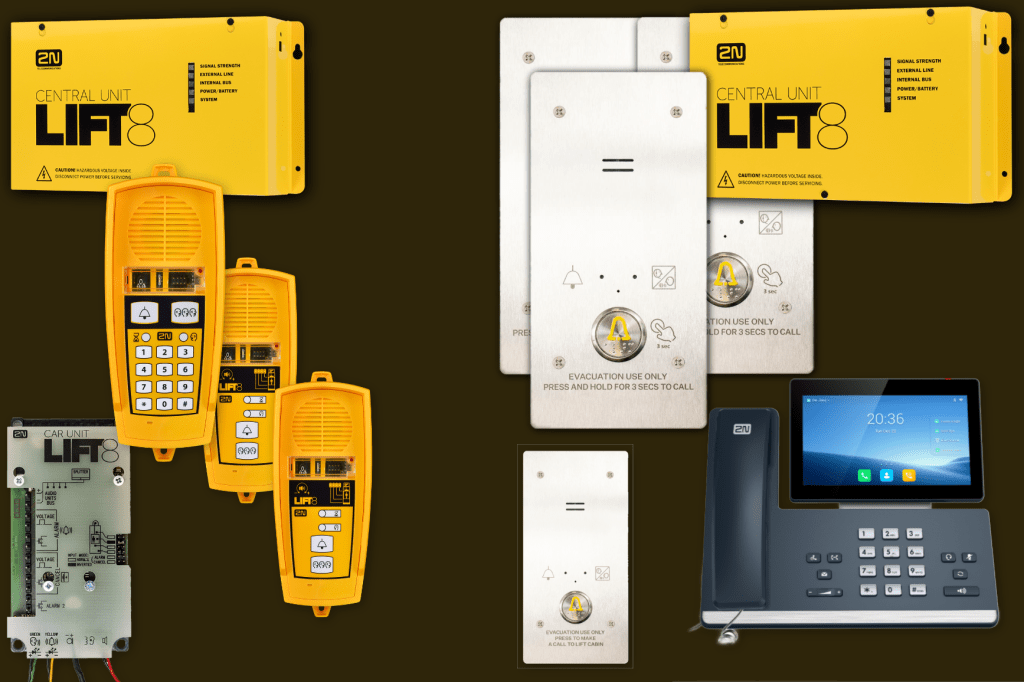
With 2N Lift8 – A comprehensive communication system can be delivered for use in a critical evacuation situation.
There are two parts to the communication system:
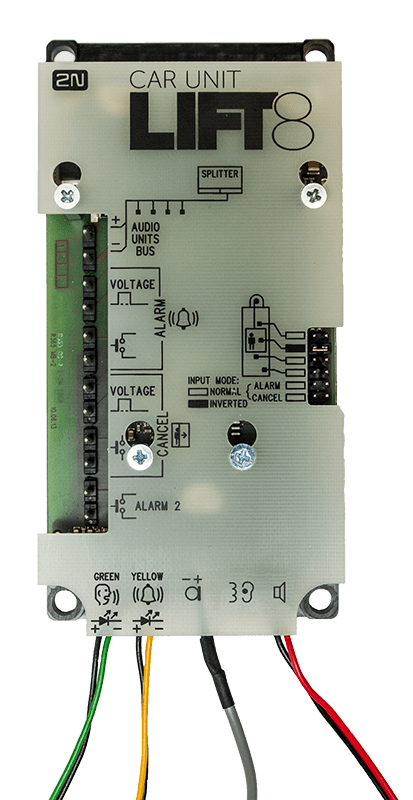
Lift Car allowing all the following to communicate
Machine Room
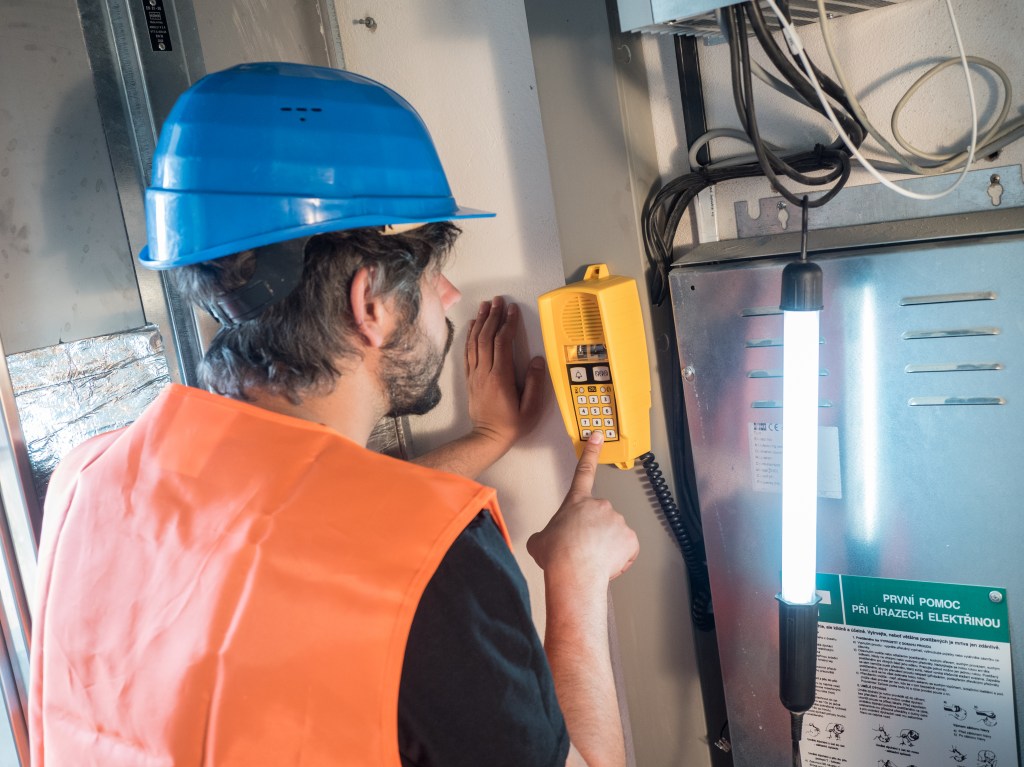
Main Elevator Evac. Floor (MEEF) Intercom
Lift car
Lift car roof
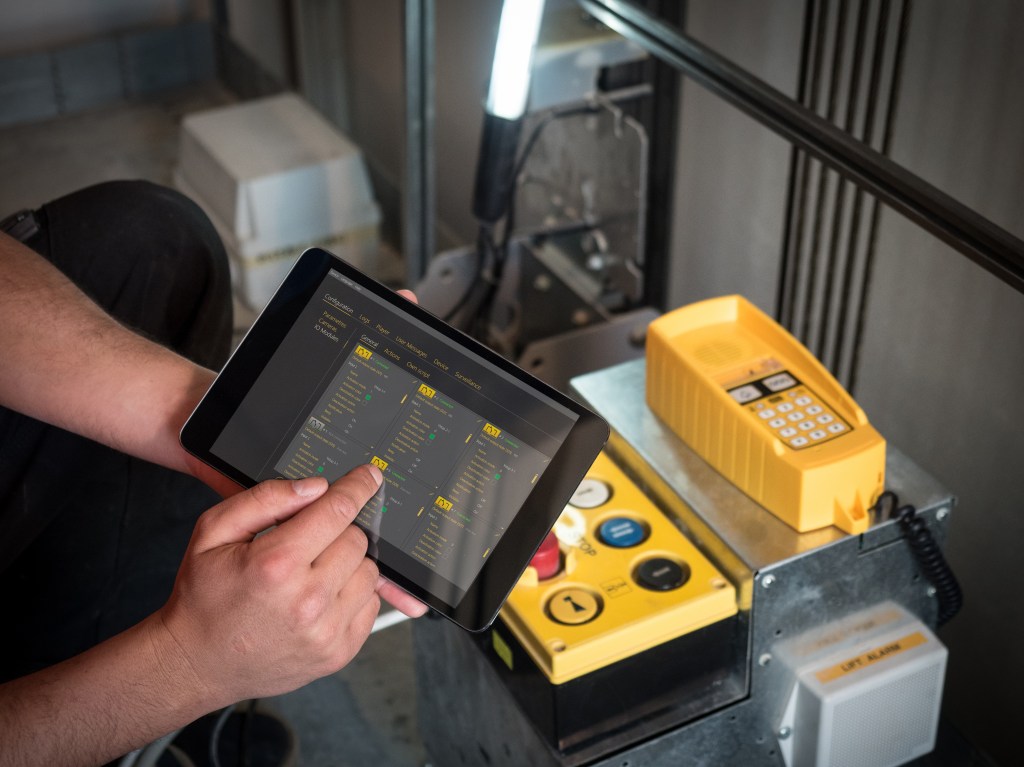
Lift pit
Normal elevator call centre through 4G VoLTE, VOIP, or Analog line
Lift Landings allowing all the following to communicate
A landing intercom at each floor
Main Elevator Evac Floor (MEEF) or Control room phone
In the Evacuation mode, 2N Lift8 ensures a reliable communication with the evacuation elevator floors, which is crucial for a safe and rapid evacuation of persons in emergency.
The MEEF Intercom activates a the highest priority call to the lift car, and technicians assisting can also speak across the multi station intercom system to communicate with emergency responders.
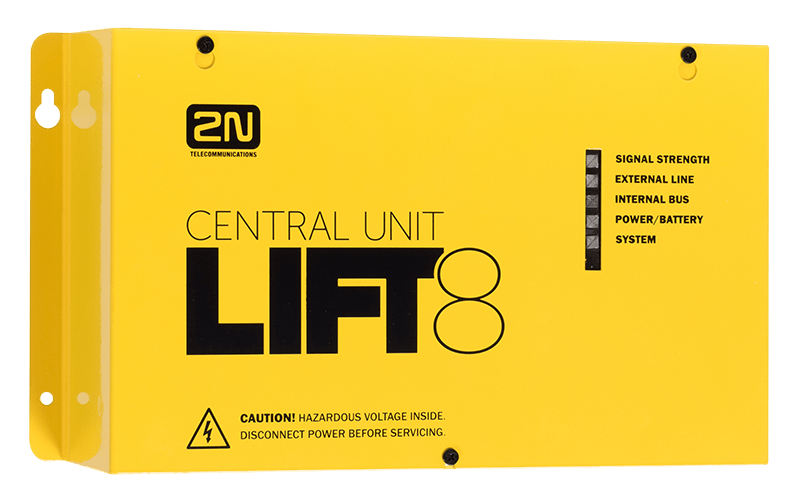
The system is controlled by a Central Unit (CU), which provides telecommunication connection of the audio units with an IP phone. Thus, a responsible and duly trained person can communicate with the evacuees on all the floors via an IP phone, ensuring a successful evacuation process. The landings call the MEEF where it can be assured that someone can answer the call. The landing help points do not call directly to the lift car as there may be situations where the lift car is not able to be occupied.
Up to 64 landing units can be connected in a single system using a simple two-wire connection. The first 8 units connect directly to the 2N Lift8 Central Unit, while each additional group of 8 requires a 2N Lift8 Splitter. These units can be installed up to 600 meters away from the Central Unit, making this solution ideal even for high-rise buildings.
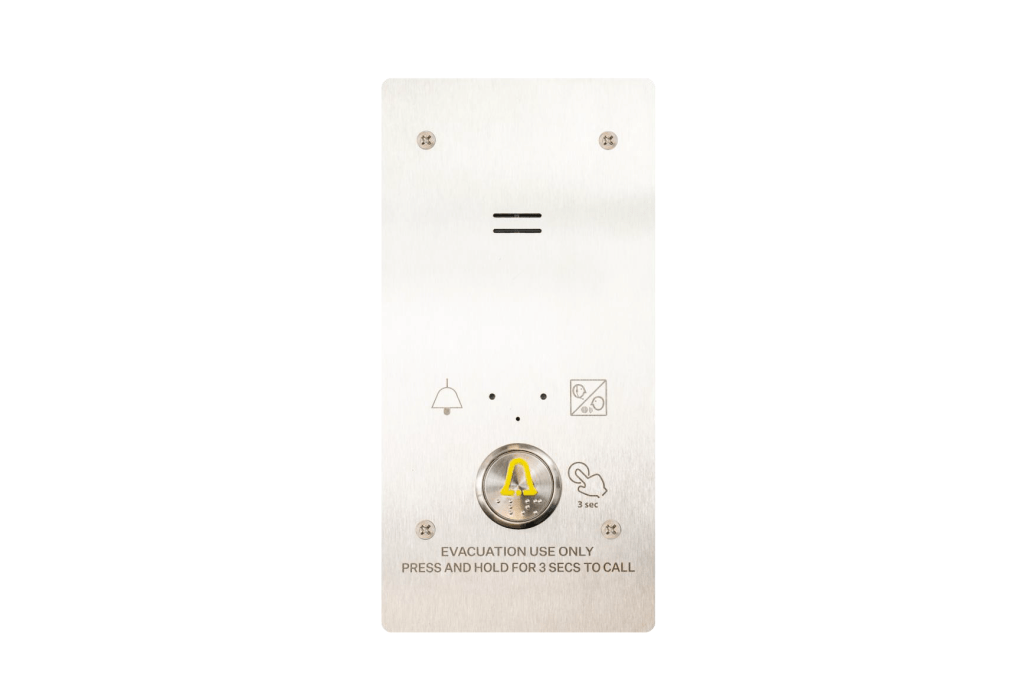
The evacuation unit for individual floors is a key component of the comprehensive evacuation communication solution built on the 2N Lift8 products. It ensures reliable and structured voice communication between evacuation floors and the control room – fully compliant with the EN 81-76 standard.
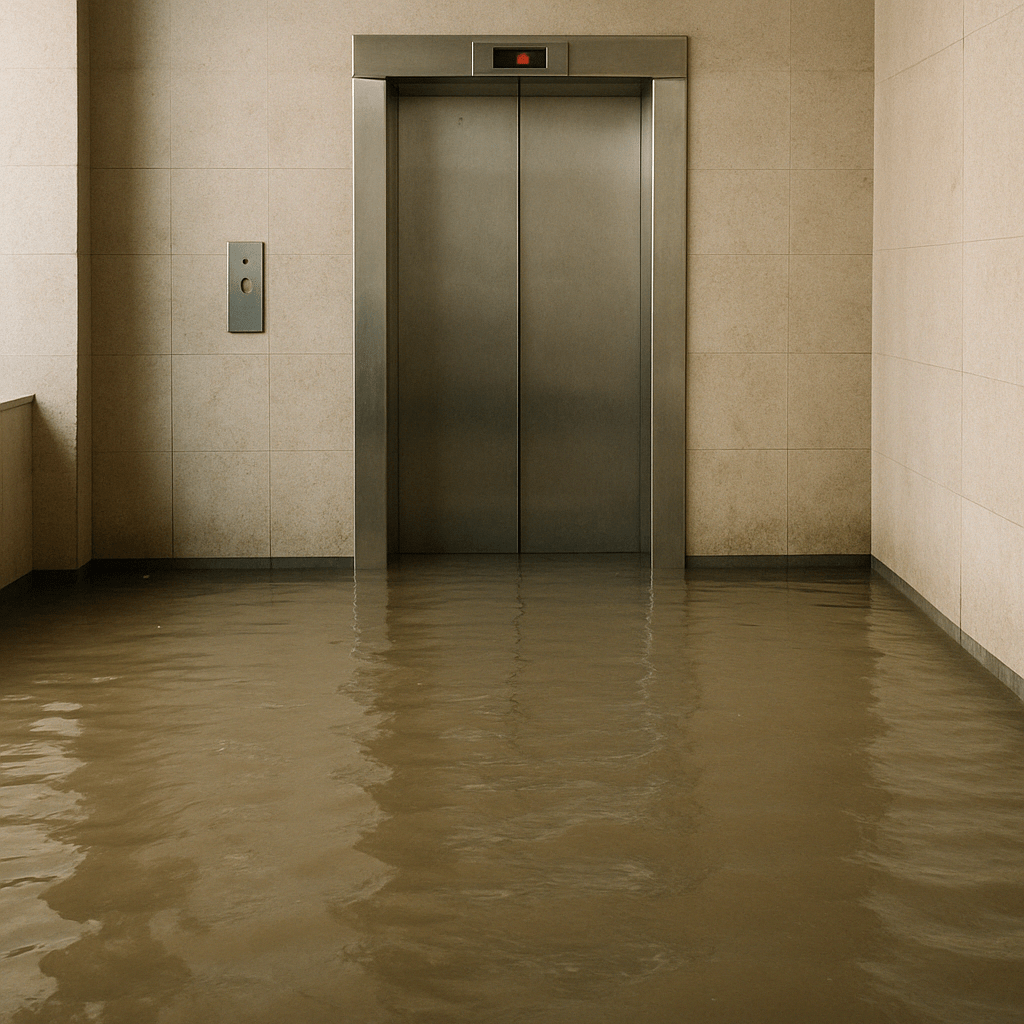
What needs to be done after a lift pit becomes flooded?
No matter what kind of lift you have, if the pit has filled up with water some important checks have to be made. Ideally the lift car and counterweight were parked safely above the flood level and the damage was limited to the pit area. If the lift was running, water could have been carried through moving parts like ropes throughout the shaft.
Unfortunately, some costly repairs are likely, and left unchecked the damage may cause issues in the future. Some equipment may appear ok from the outside, but water can wear away lubricants on bearings and cause trouble with electrical components due to corrosion leading to troublesome breakdowns or safety issues.
Check, replace, or overhaul: ➡ Safety circuit contacts such as buffer switches, governor slack rope switches, stop buttons, and overtravel limits. ➡ Electrical equipment like lighting and power outlets ➡ Special electronic equipment such as seismic sensors, inspection control stations, and pit emergency intercoms ➡ Governor ropes and compensation ropes – these steel wire ropes can often have a fibre core which can retain moisture and lead to later corrosion. ➡ Buffers – Polyurethane buffers should be checked for deformation as they can absorb moisture. Replace if damaged. Hydraulic buffers may have water that entered through breather holes and need to be thoroughly overhauled or replaced. ➡ Guide rails – clean, dry and then re lubricate ➡ Governor and compensator pulleys or sheaves – bearings to be overhauled or replaced ➡ For hydraulic lifts – ensure no water entered the tank or pump
Take care of the environment. Excess lubricants are present from guide rails, and especially in hydraulic lifts. Give consideration to where dirty water is pumped to.
If your lifts had a flooded pit and did not automatically shut down it’s a good idea to have a water level sensor installed.
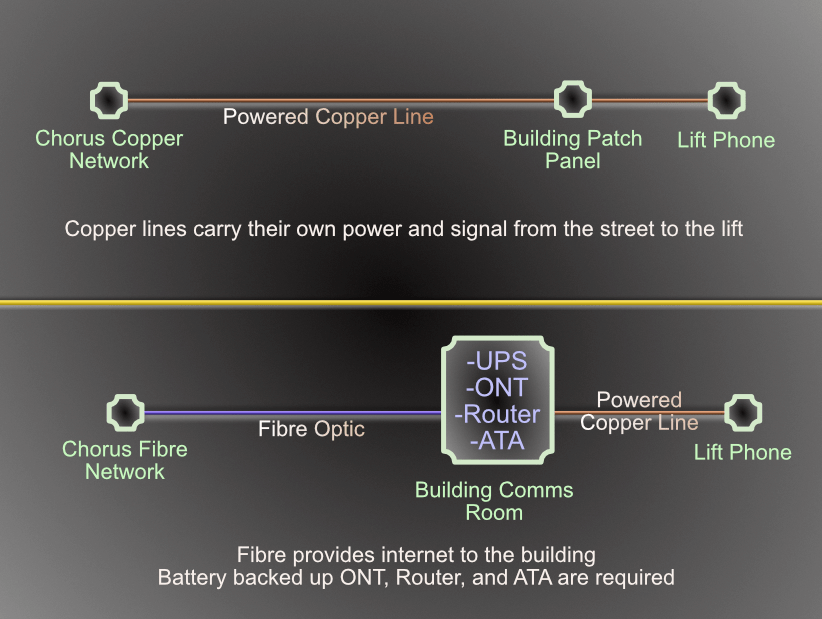
Lifts using analogue ‘land lines’ will require a battery backed up 4G cellular or fibre VOIP system for safety and compliance
For decades, analogue copper phone lines have quietly served as the backbone of emergency communication in lifts — bringing not just connectivity, but power directly from the street into the lift car’s emergency auto dialler telephone. This meant no on-site batteries, no modems, and reliable operation even in a power outage. But as Chorus phases out the copper network across New Zealand, buildings are required to shift to 4G cellular or fibre-connected systems. Unlike copper, fibre doesn’t carry power — so lift emergency phones must rely on on-site internet equipment and monitored battery backups to stay online. Where this phone line is provided through the building’s fibre connection this will include conversion equipment such as ATA (Analogue Telephone Adapters) so that the installed analogue lift phones can continue to work.
Very often buildings are found to not have a UPS (uninterrupted power supply) for battery backup of important equipment. Furthermore battery backups require monitoring for the battery condition, and often have a maintenance requirement to replace the battery in as little as 2 years leaving another area of compliance and safety overlooked. The lift contractor may not have control or visibility of this equipment located elsewhere in the building, leaving a risk that maintenance and testing is neglected.
This is a fundamental change that introduces new complexity and risk, and building owners need to plan carefully to ensure compliance, reliability, and safety are maintained. On a positive note, 4G and VOIP based solutions are significantly cheaper than the existing copper lines, which cost upwards of $70 a month.
Louis Deverell of LDEV Tech has a decade of experience in implementing reliable connectivity solutions that do not rely on analogue telephone lines, and can function when critically needed in a power outage. Through a supporting division LDEV Connect, we can supply the industry with end to end products and solutions that include advice, hardware, with supporting SIM card and VOIP connectivity services. LDEV Connect supplies products from 2N, a leading global manufacturer of connectivity equipment. 2N products support cloud monitored connectivity to ensure the equipment is online and maintenance is up to date.
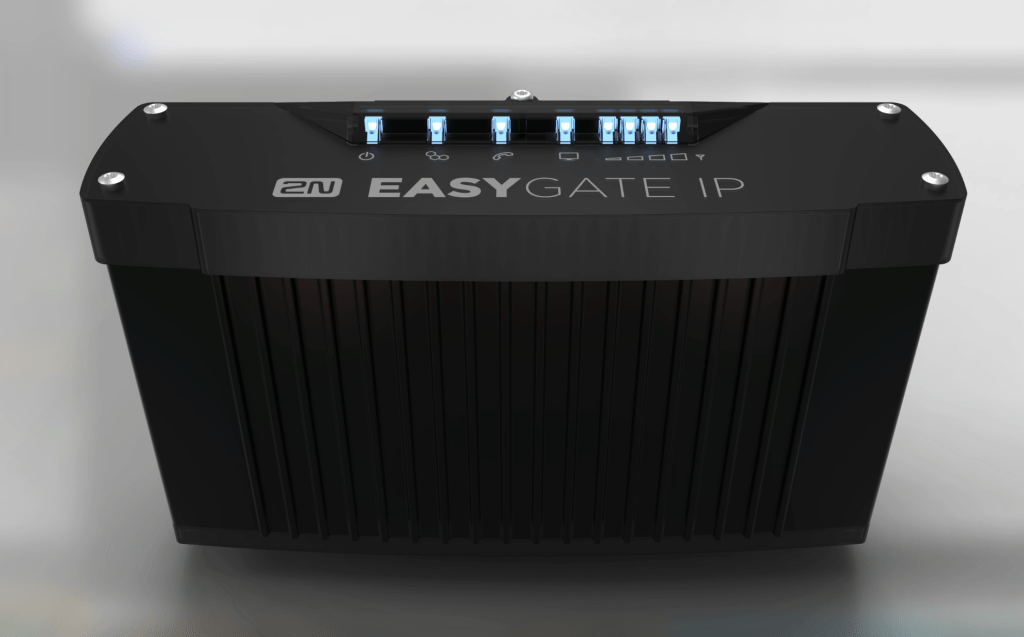
Solutions such as the 2N EasyGate IP capture the full requirements of a 4G Dual-SIM gateway that can provide the analogue telephone line to the lift car, and carry high quality phone calls over VoLTE or VOIP. This single device is capable of cloud connected monitoring and configuration, and importantly features a built-in battery. The device needs no connection to the building external to the lift installation, and simply requires a power supply.
Digital and connected systems are ingrained in our modern industry and in our lifestyles, and there is no exception for vertical transport. Here I look at 5 interesting ways that advanced technology is making a unique impact on lifts and escalators.
1. AI camera safety monitoring of escalators
What if an escalator system could detect a passenger who had fallen, and safely stop an escalator? In a research paper published by Yantai Luo of Mitsubishi Elevator Corporation, Luo describes the risks in places such as the Shanghai Metro which serves more than 30 million passengers per day, and how real-time video analysis can be used to detect and shut down escalators in the event of a passenger falling.
It makes me wonder where this technology could take us. Could we also detect falling suitcases, strollers, young children playing, and other misuse on escalators? With technology rapidly advancing these advanced solutions are a real possibility. With lifts, AI video analysis could detect passengers in a busy elevator lobby approaching in wheelchairs or using visual impairment aids such as a guide dog or cane. The lift system could then apply considerations to the door timings and voice annunciation accommodations.
Read the full paper here, and see the topic presented by Richard Peters on YouTube at the 2020 Lift & Escalator Symposium
Many modern lifts feature internet and Ethernet connectivity as part of their control, monitoring and external communication systems, and with that comes the risk that equipment can be hacked and manipulated by bad actors, causing disruption and potential safety threats. It’s not just new equipment that is affected, often older lifts are retrofitted with modern communication and diagnostic equipment which requires robust security.
In March 2023 the legislator in Germany decided on a new technical rule for operational safety in TRBS 1115-1 requiring elevator operators to submit system specific documentation how their system has been assessed for cybersecurity risks, else risk an annual inspection defect.
This is a diligent and world leading approach, and such a requirement would come as a shock if implemented in many other places in the world. However, the risk of compromised equipment cannot be underestimated.
Many major manufacturers are investing heavily in R&D for Digital Twin systems, so what exactly is it? In short, a Digital Twin is a virtual replica of a real piece of equipment that can receive real time real-world information from sensors on the physical equipment and use this information to simulate its operation.
A virtual replica of the lift systems in a large commercial building could be used to anticipate maintenance requirements, equipment failures, the effects lift availability and building population on traffic performance, and provide insights into past and future energy usage. With machine learning and artificial intelligence technologies applied, this information can be used in ways not previously possible.
A Digital Twin allows these simulations to be far more accurate than using typical desktop modelling software with limited inputs, and I look forward to seeing the advancements that the industry brings to this space.
4. API
As part of the rapid adoption of IoT into the Vertical Transport industry, ways to communicate the increased availability of digital real-time information requires methods for that data to be integrated easily into other platforms.
Application Programming Interfaces (API) allow data points to be shared between systems and equipment, for example allowing a site building management system to incorporate not only the on-site live equipment status, but also data shared by the lift maintenance contractor’s back-end systems such as maintenance and repair schedules, technician dispatch status, and service tickets.
5. PESSRAL
Relying on software and digitally controlled components for critical safety functionality is not as commonly adopted in the lift industry as it is in other areas such as commercial aviation, but more of this equipment is emerging in the industry. Used carefully, these types of devices can offer advantages in safety, cost, and reliability. Traditionally systems such as brakes and safety gear required a primarily mechanical fail-safe activation, and other areas of controls typically employ electro-mechanical safety methods that cannot be compromised by digital equipment and software failures.
PESSRAL, or Programmable Electronic System in Safety Related Applications for Lifts were first allowed in an EN81-1/2 A1:2005 amendment intends to reflect the IEC 61508 standard for functional safety of programmable electronic safety related systems requiring a critical approach to design and implementation.
An example of this is the electronic safety gear shown by OTIS in their newly released Gen360 product, which features no traditional governor rope and mechanical safety system, instead the safety gear would be expected to electronically detect freefall and overspeed to trigger the application of the safety gear, mechanically gripping the rails to bring the lift to a rapid stop.
Let me know your thoughts
These are just some of the ways advanced technologies and integrations can shape the vertical transport industry. I’d love to hear what your thoughts are on the biggest gamechangers, and conversely the things that are big now and will be a passing fad like the 3D TV at home.
IOT, or Internet of Things on modern lift equipment can be much more than just notifications when a breakdown happens.
1. Search for the most common errors appearing across the portfolio and find a fix. Eliminate unexpected breakdowns in bulk!
2. Analyse the latest tech support letters to see how prevalent new findings are. If you know a software version has known troubles, or bad hardware needs replacing you can plan ahead to keep across it.
3. Look for unexpectedly busy lifts and make sure they have appropriate maintenance hours scheduled.
With thousands of lifts in New Zealand now connected to the internet with diagnostic capability, the advantages a lift service provider can gain are huge.



You must be logged in to post a comment.